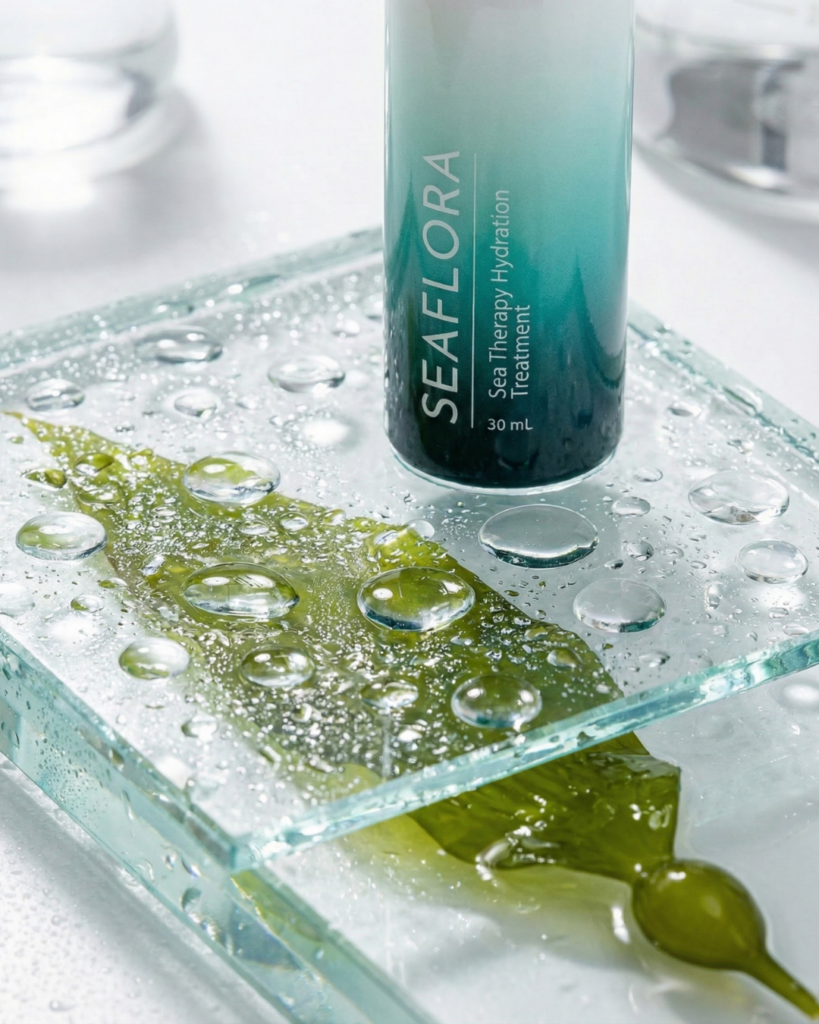
Skin Secrets: Discover the Marine Way to Radiant Health
We all know drinking water is good for us, but what if I told you there’s more to staying hydrated? For a long time, we’ve relied on synthetic stuff for our skin, but the ocean is quietly offering up some pretty amazing alternatives. Seaweed, that stuff you sometimes see washed up on the beach, is packed with natural compounds that are seriously changing the game in cosmetic science.
We’re talking about ingredients that go way beyond just moisturizing; they’re actively working to keep your skin looking and feeling its best. Let’s dive into the science behind why seaweed is becoming the go-to for effective, natural skincare.
Key Takeaways
Seaweed contains specific “bioactives” that rival synthetic pharmaceuticals in efficacy.
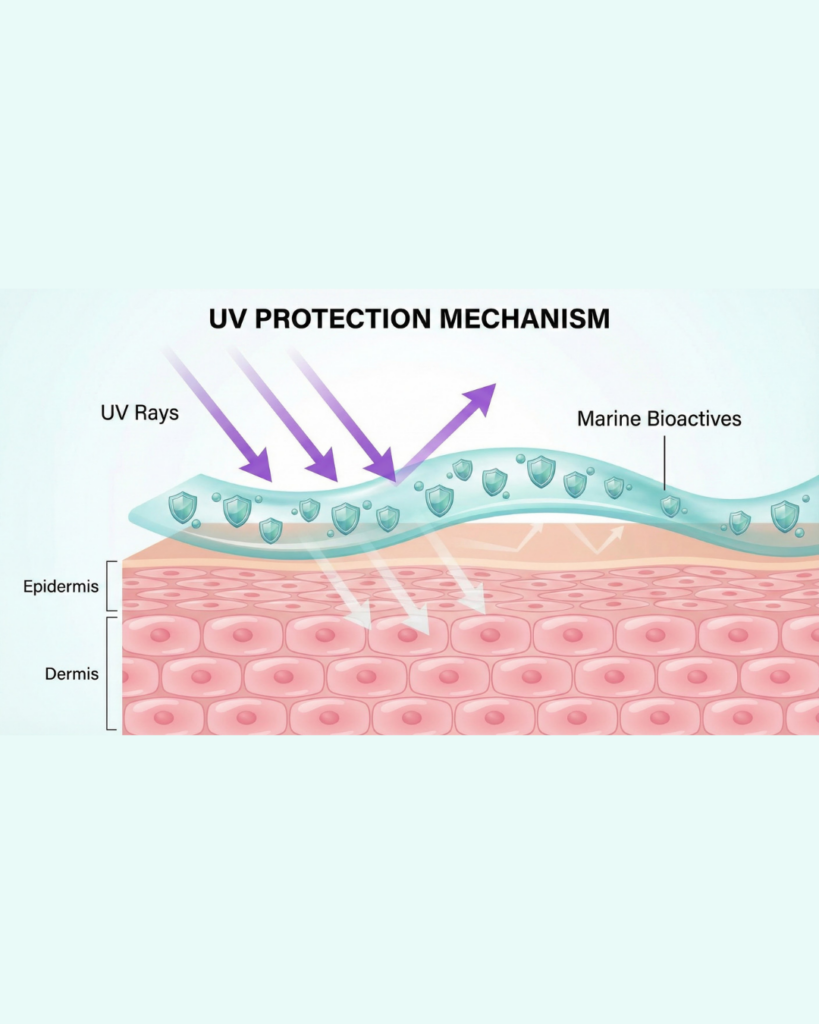
Mycosporine-like Amino Acids (MAAs) absorb specific UV wavelengths (265nm-362nm), acting as a stable, natural sunscreen.
Fucoidans and Phlorotannins inhibit the enzymes that break down collagen, directly fighting the biological signs of aging.
Seaweed Polysaccharides from species like Saccharina japonica have been shown to outperform Hyaluronic Acid in moisture retention.
Rigorous Chemical Analysis is essential to ensure these natural powerful ingredients are free from environmental heavy metals.
Introduction
For a long time, we’ve relied pretty heavily on synthetic chemicals for a lot of things, especially in skincare and health products. Think about it—parabens, sulfates, artificial fragrances—they’ve been the go-to ingredients for ages. But lately, there’s been a big change happening. People are starting to look for more natural, sustainable options, and guess where a lot of those are coming from? The ocean.
The sea is basically a treasure chest of amazing compounds that nature has been perfecting for millennia. We’re talking about things like algae, seaweed, and other marine life that have developed unique ways to protect themselves and thrive in their environment. These natural substances, often called bioactives, are now getting a serious look from scientists and product developers. Why? Because they often do the same jobs, or even better, than the synthetic stuff, but without the downsides (like bioaccumulation or toxicity).
It’s a pretty exciting shift, moving away from lab-created ingredients towards what the ocean itself has to offer. This isn’t just about being trendy; it’s about tapping into a rich source of compounds that have incredible potential for our health and well-being.
Seaweed is far more than just a marine plant; it is a complex biological factory. Among its most potent tools are Mycosporine-like Amino Acids (MAAs). While often called “nature’s sunscreen,” the science behind them is specific and impressive. MAAs are water-soluble molecules with a unique ability to absorb UV radiation specifically between 265nm and 362nm—the exact wavelengths that cause the most damage to cellular DNA.
Unlike synthetic filters that can degrade and cause oxidative stress, MAAs are remarkably stable. Specific MAAs, such as Porphyra-334 (extracted from Porphyra yezoensis), have been shown in studies to not only block UV rays but also actively increase cell viability by up to 88% after exposure. They work double-duty: shielding the skin from the outside while scavenging reactive oxygen species (ROS) from the inside to prevent photoaging.
What this means for you: Seaweed provides a natural, invisible shield that stops UV damage before it reaches your DNA, without the chemical instability of standard sunscreens.
Anti-Aging: Preventing Skin Breakdown & Collagen Loss
We often hear about “boosting collagen,” but preserving what you already have is just as critical. Marine bioactives, particularly Fucoidans and Phlorotannins found in brown algae, tackle aging by targeting the enzymes responsible for skin breakdown: collagenase and elastase.
As we age, these enzymes become overactive, chewing through the structural mesh that keeps skin tight. Research on species like Sargassum horridum has identified novel anti-aging metabolites, including Diosgenin (a steroidal saponin) and specific phenolic compounds that inhibit these enzymes. By dampening elastase activity, these seaweed extracts help maintain the skin’s matrix elasticity. Furthermore, compounds like those found in Padina boryana have been linked to the upregulation of Nrf2—a master regulator of antioxidant defense—which helps the skin naturally repair oxidative damage.
What this means for you: Instead of just “plumping” the skin temporarily, these ingredients stop the biological processes that cause sagging and wrinkles in the first place.
For those struggling with dark spots or uneven skin tone, the industry standard has often been harsh chemicals or unstable acids like Kojic Acid. However, marine science has identified a gentler, more stable pathway to brightness.
The key lies in inhibiting Tyrosinase, the enzyme responsible for melanin production (dark spots). Research on brown algae species, such as Sargassum siliquosum, has found them to be potent tyrosinase inhibitors. In fact, some studies suggest these marine extracts can inhibit this pigmentation enzyme even more effectively than Kojic Acid, all while avoiding the irritation often associated with synthetic brightening agents. This offers a route to a radiant complexion that doesn’t compromise the skin barrier.
What this means for you: You can fade dark spots and even out your skin tone using stable marine extracts that don’t burn or irritate sensitive skin like retinols or acids might.
Superior Skin Hydration: Rivaling Hyaluronic Acid
Hyaluronic Acid (HA) is the gold standard for hydration, but marine science challenges its throne. The secret lies in algal Polysaccharides—long sugar chains like alginates and agar that regulate water distribution in intertidal seaweeds to keep them from drying out at low tide.
Comparative studies on the brown alga Saccharina japonica have demonstrated that its polysaccharides can actually surpass hyaluronic acid in moisturizing retention properties. Additionally, green algae species like Enteromorpha prolifera contain lipids and PUFAs (like gamma-linolenic acid) that repair the skin barrier itself. Instead of just sitting on top of the skin, these compounds assist in “barrier restoration,” helping to lock moisture in biologically rather than just physically.
What this means for you:Seaweed doesn’t just wet the skin; it creates a breathable, moisture-locking film that repairs your natural barrier, often performing better than expensive HA serums.
Beyond Hydration: Skin Microbiome & Acne Defense
One of the most exciting frontiers in marine skincare is how seaweed interacts with the skin’s microbiome. Synthetic preservatives and harsh acne treatments often nuke healthy bacteria along with the bad, leading to irritation. Seaweed offers a targeted alternative.
Research highlights that extracts from Halymenia durvillei can positively modulate the skin’s ecosystem. In clinical trials, these extracts maintained beneficial bacteria (like Actinobacteria) while significantly reducing Corynebacterium kroppenstedtii—a specific marker associated with skin redness and sensitivity.
For acne-prone skin, the news is equally promising. Fractions from Fucus spiralis have demonstrated the ability to inhibit the growth of Cutibacterium acnes (the bacteria behind breakouts) by approximately 50–60%. This suggests that seaweed can act as a powerful, non-drying antimicrobial agent, clarifying the skin without disrupting its delicate bacterial balance.
What this means for you: You can fight acne and redness by balancing your skin’s good bacteria, rather than destroying your skin barrier with harsh chemicals.
Smart Delivery: Getting Bioactives Deep Into the Skin
Discovering a powerful ingredient is only half the battle; ensuring it penetrates the skin is the other. This is where modern formulation science meets marine biology.
Raw seaweed is effective, but to maximize results, advanced formulations often use encapsulation techniques (like liposomes or nanosystems). Think of these as microscopic “vehicles” that carry the delicate bioactive compounds (like antioxidants and peptides) deep into the skin’s layers. This technology protects the nutrients from breaking down on the surface and ensures they are released exactly where your cells need them most, enhancing stability and ensuring you get the full clinical benefit of the algae.
What this means for you: We use high-tech delivery systems to ensure the ingredients actually penetrate deep into your skin layers rather than just sitting on top and washing off.
The Seaflora Standard: Ensuring Skin Safety & Purity
While the ocean offers potent cures, it acts as a sponge for the environment. Seaweeds are bio-accumulators, meaning they can absorb heavy metals like Cadmium (Cd), Lead (Pb), and Mercury (Hg) if they are harvested from polluted waters. This is the primary challenge cited in cosmetic science reviews regarding natural ingredients.
This is why the Seaflora is rigorous about “Chemical Analysis.” It is not enough for an ingredient to be natural; it must be pure. By utilizing strict extraction methods and testing raw biomass, we ensure that we isolate the beneficial bioactives (like fucoidans and MAAs) while completely eliminating potential environmental toxins. This ensures the safety profile matches the efficacy profile, giving you the clinical power of the ocean without the risks associated with unverified raw harvesting.
Conclusion
So, we’ve talked about how seaweed isn’t just some trendy ingredient; it’s packed with some seriously cool stuff. We’ve seen how compounds like MAAs can act like a natural sunscreen and how fucoidans might help keep our skin looking younger by protecting collagen. Plus, the idea that seaweed extracts could be even better at moisturizing than hyaluronic acid? Pretty wild, right?
It’s clear that the ocean’s bounty offers a lot more than just hydration. These marine bioactives are showing real promise across different industries, from skincare to potentially even food and medicine. The research is still ongoing, and there’s a long way to go before we see all these potential benefits fully realized in everyday products. But the science is building, showing that nature, specifically the sea, has some powerful answers.
The journey from discovering these compounds in seaweed to creating reliable, effective products is complex. It involves careful extraction, rigorous testing, and a deep understanding of how these molecules interact with our bodies and the environment. It’s not just about finding something that works; it’s about finding it in a way that’s sustainable and safe.
Frequently Asked Questions
What are seaweed bioactives and why are they important? Seaweed bioactives are special natural compounds found in seaweed. Think of them like tiny power-ups from the ocean! Scientists are excited about them because they can do amazing things for our health and the environment, like protecting our skin from the sun or helping wounds heal faster. They’re a natural alternative to chemicals we might get from a lab.
What are Mycosporine-like Amino Acids (MAAs)? MAAs are like nature’s sunscreen! These compounds are found in seaweed and help protect it from the sun’s strong rays. For us, they can help shield our skin from harmful UV light, reducing the risk of sunburn and long-term skin damage. They’re a natural way to fight off sun damage.
How do seaweed compounds help with anti-aging and skin protection? Some seaweed parts, like fucoidans, are great for your skin. They can help protect the building blocks of your skin, like collagen, which keeps skin firm and youthful. This means they can help reduce wrinkles and keep your skin looking younger for longer. They also help calm down redness and irritation.
Can seaweed moisturize skin better than hyaluronic acid? Seaweed contains amazing ingredients that can lock in moisture, making your skin feel super soft and hydrated. Some studies suggest these natural moisturizers might even work as well as, or even better than, hyaluronic acid, which is a popular ingredient in skincare for hydration. It’s like giving your skin a big drink of ocean water!
What is the Seaflora Standard, and why is it important for quality? The Seaflora Standard is all about making sure the seaweed products you use are the best they can be. It means they carefully choose their seaweed, harvest it responsibly, and use special methods to keep all the good stuff inside. This ensures you’re getting a pure, effective product that’s good for you and the planet.
Cookies and data we need to make sure the website is secure and working properly. These cookies are set by us or by third party service providers we use to implement additional functionalities or to enhance features and website performance
Performance & Analytics
These cookies are set to provide quantitative measures of website visitors. Information collected with these cookies is used in operations to measure website or software KPIs, such as performance. With the usage of these cookies we are able to count visits and traffic sources to improve the performance of our website.
These cookies are set by our advertising partners to provide behavioral advertising and re-marketing analytical data. They collect any type of browsing information necessary to create profiles and to understand user habits in order to develop an individual and specific advertising routine. The profile created regarding your browsing interest and behavior is used to customize the ads you see when you access other websites.